


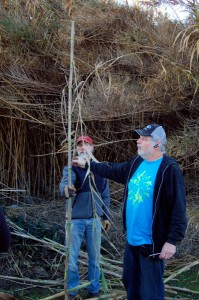
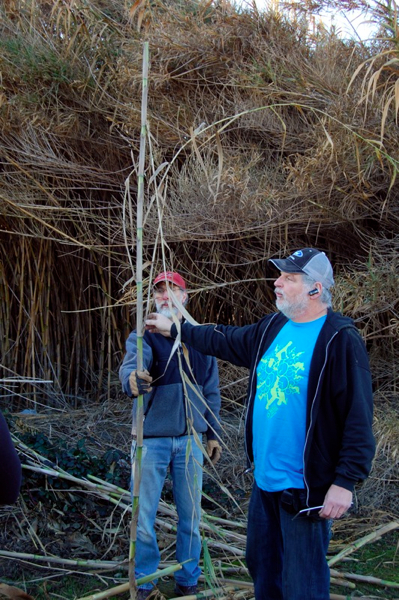
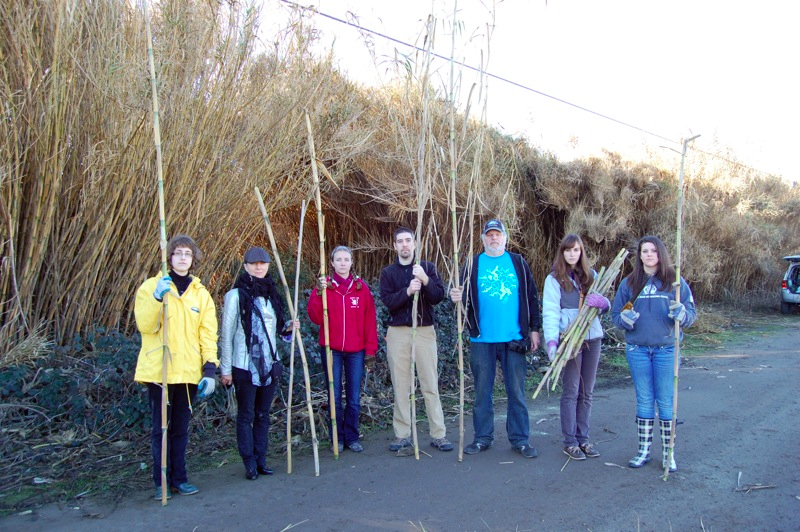
The day before the Meg Quigley Vivaldi Competition and Bassoon Symposium started (see previous post), Stockton Symphony contrabassoonist Larry Rhodes (shown at right with San Francisco Symphony contrabassoonist Steve Braunstein) led a small group of us on a cane harvesting expedition. Giant cane (Arundo donax), which we bassoonists use to make our reeds, is classified as an invasive pest in California. It tends to grow in streams or marshy areas, and is primarily propagated by pieces floating along waterways and taking root in new locations. The area surrounding Stockton, most of which is part of the San Joaquin River Delta, is host to many stands of cane.
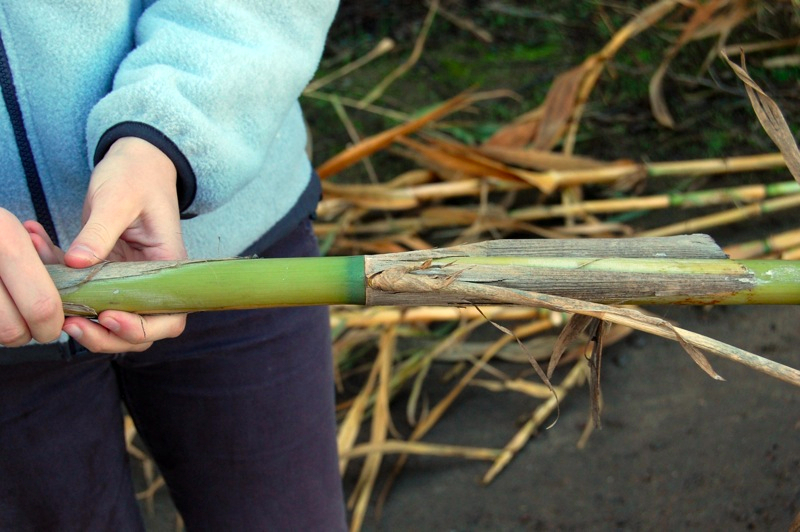
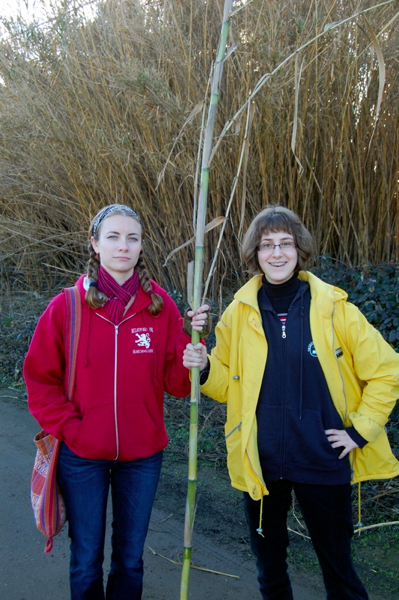
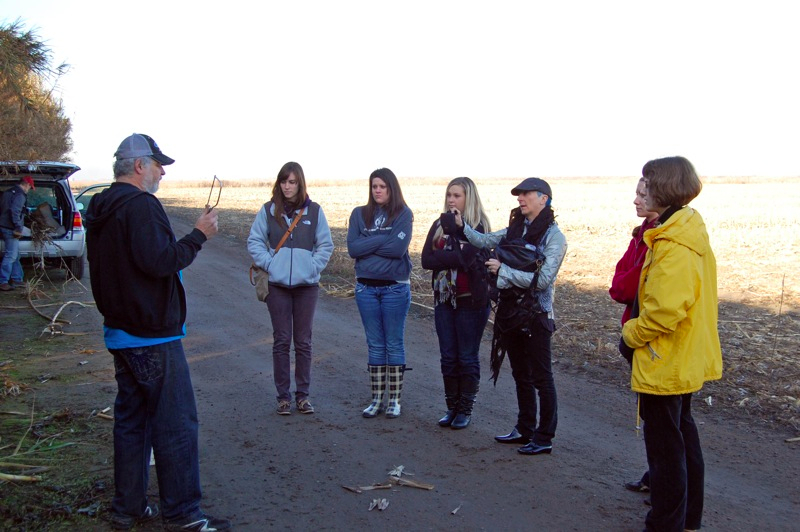
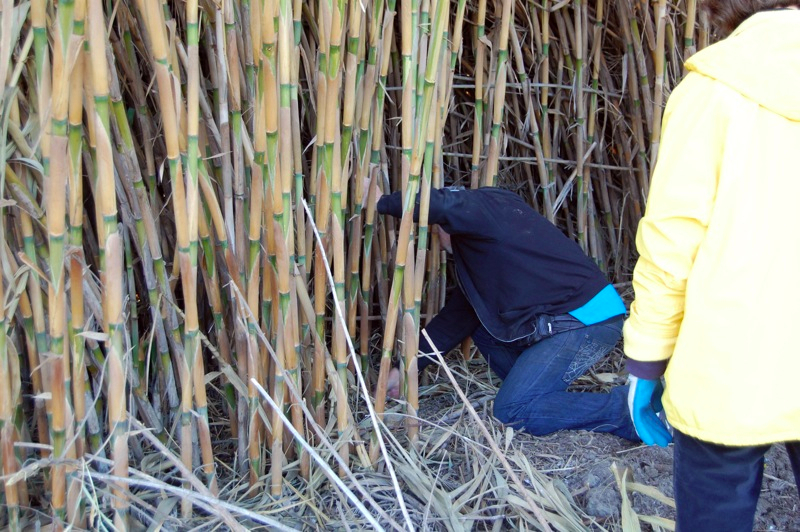
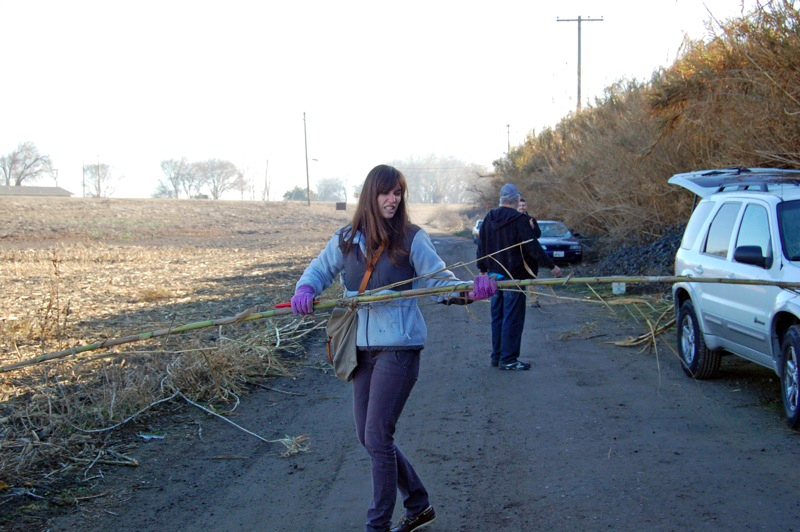
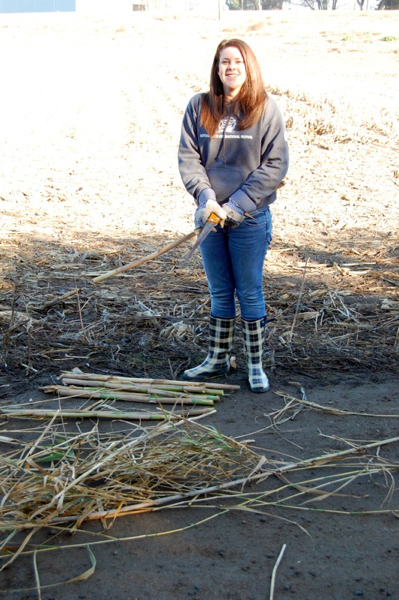
Larry found a particularly promising looking cane stand via Google Earth, then went in person to scope it out and obtain permission from the farmer on whose land it sits. Two carfuls of us drove out to the spot, about 25 minutes west of Stockton, where we met Larry and Steve. Larry showed us some of the cane he’d already cut, using it to demonstrate what we should be looking for in terms of diameter, growth patterns, and color. In short: for bassoon reeds you want green cane, about an inch in diameter, that has branches growing fairly low to the ground. He then set us loose in the cane patch. Armed with the small saws we’d brought, we spread out and started clambering in amongst the cane.
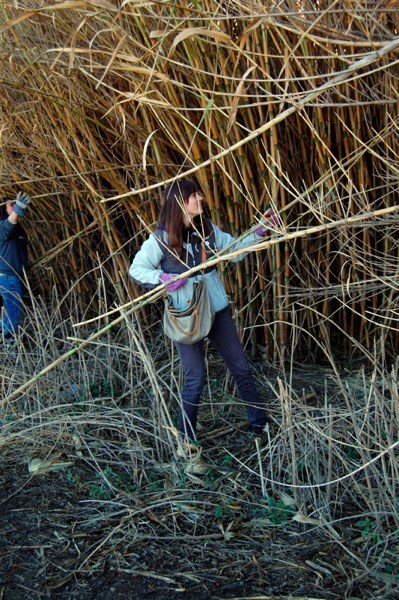
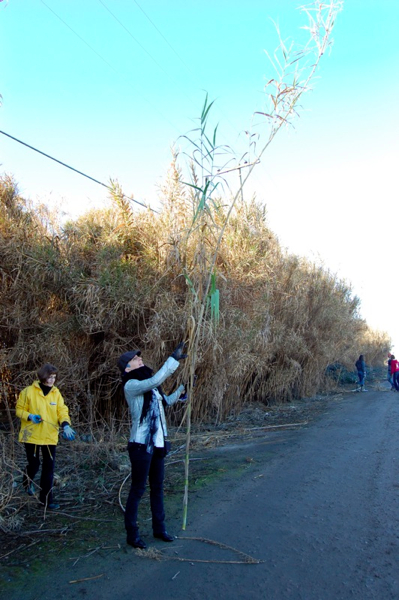
It became obvious very quickly that very different ages of cane grow all together. It took careful searching to find stalks of the proper size and age amongst lots of too-small, too-young, and dead stalks. We all started out slowly, cutting one stalk at a time and taking it to Larry for inspection. But, pretty soon we got the hang of just what it was we were looking for. The one thing we hadn’t thought about was how we’d transport the cane back to Stockton (or back home, for those who’d flown in just for MQVC). Larry tied 80-something stalks to the roof of his station wagon, but our hauls were much smaller.
I ended up with about eight stalks, although I had to cut them in half to fit them in my car. After stripping the branches and discarding broken or too-small pieces, I now have just over a dozen five-to-six-foot sections of cane. They’re now stuck up in the rafters of our garage, where they’ll sit drying for the next six months or so. After that, I’ll prop them upright in the sun for about two weeks months to complete the curing process. Then, I can cut ’em up, split the tubes, and get going on turning my harvest into reeds!
More photos from the expedition:



Lawrence Rhodes
January 25th, 2012
NOT 2 Weeks. Two Months.
David A. Wells
January 25th, 2012
Whoops… fixed.
Peter Douglas
October 19th, 2013
I lived in Barcelona for a year and did the same, harvesting cane from the roadside, riverbed sand even within city limits! I shipped a couple boxes back to Canada and 30 years later I still have a bunch. It’s not my only source for reeds so it should last a good deal longer. I’ve had a lot of fun with it.
Lawrence Rhodes
October 21st, 2013
Collecting wild cane is very cost effective if you do it locally. I use it to make reeds for Forrest’s Music.