Ralph’s Secret Weapon

As I dig out from the end-of-the-semes­ter crunch, I see that I have start­ed quite a few blog posts in the last cou­ple of months with­out fin­ish­ing any of them. So while I get my act back togeth­er, here’s anoth­er repost from a pre­vi­ous incar­na­tion of my site:


[Time­out con­tact­ing Open Library]

I don’t nor­mal­ly read chil­dren’s books, but Ralph’s Secret Weapon mer­it­ed an excep­tion. The book’s main char­ac­ter is unique (as far as I can tell) amongst char­ac­ters in chil­dren’s books: Ralph plays the bassoon.

I don’t recall exact­ly how I became aware of the exis­tence of this book. I think that it may have been via Google’s rel­a­tive­ly new and won­der­ful Book Search. In any case, once I learned of its exis­tence, I set about try­ing to obtain a copy. Ralph’s Secret Weapon is out of print, but the UW Coop­er­a­tive Chil­dren’s Book Cen­ter owns a copy. A few clicks of the mouse lat­er, I’d arranged for the book to be sent to UW’s Memo­r­i­al Library, where I could eas­i­ly retrieve it.

When the e‑mail mes­sage arrived announc­ing that Kel­log­g’s book was wait­ing for me, I set out for the cir­cu­la­tion desk with an air of antic­i­pa­tion. I retrieved the diminu­tive yet col­or­ful vol­ume and eager­ly set about read­ing it. I was over­joyed to find that Ralph’s bas­soon play­ing is not mere­ly a glossed-over detail; it is a main com­po­nent of the plot. Kel­log­g’s car­toony bas­soon appears in ten out of the twen­ty-sev­en illus­tra­tions (plus the cov­er), with Ralph car­ry­ing the instru­ment in its case in three more. But, as I reached the last page, my utter delight turned to a bit­ter dis­ap­point­ment, and then to a dis­be­liev­ing anger.

Why the sud­den change?” you might ask. Allow me to pro­vide a sum­ma­ry of the plot:
Ralph is sent off to his aun­t’s house for the sum­mer. His aunt greet him with a cake and a bas­soon. That after­noon, Ralph has his first bas­soon les­son. The teacher tells him that he’s not cut out for the bas­soon, but Ralph’s aunt sees great pos­si­bil­i­ties for him as a snake charmer. She takes Ralph to a snake charm­ing com­pe­ti­tion (coin­ci­den­tal­ly being held in town that very night), which he eas­i­ly wins. Ralph’s Aunt sees greater pos­si­bil­i­ties for him, and calls up the navy, which is being ter­ror­ized by a sea ser­pent. Ralph goes to sea aboard a destroy­er, and starts play­ing his bas­soon. Sure enough, the sea ser­pent is drawn to the sound. But, he eats the bas­soon and grabs Ralph. Luck­i­ly, Ralph has brought along a secret weapon (which turns out to be his aun­t’s cake) that caus­es the ser­pent to regur­gi­tate Ralph, his bas­soon, and a bunch of oth­er peo­ple who’d been recent­ly swal­lowed. Ralph and his aunt return home, where Ralph announces that he’s giv­ing up the bas­soon for­ev­er. His aunt does­n’t object, and Ralph spends the rest of the sum­mer goof­ing off.

Wait.

What?

GIVING UP THE BASSOON FOREVER?

What kind of mes­sage is this send­ing to chil­dren? That music isn’t fun and if you aren’t instant­ly good at it, you should quit and spend your time actu­al­ly hav­ing fun instead? My first read­ing of the book was an extreme­ly fast one, so I took the time to read and look at the illus­tra­tions more close­ly. This only deep­ened my dissatisfaction.

In the illus­tra­tion in which Ralph’s aunt sets him up in her music room, the book she places on the music stand is titled “Drea­ry Drills and Tedious Exer­cis­es for the Bas­soon” (Music is bor­ing!). In Ralph’s first — and only — les­son with Mae­stro Pre­pos­teroso (Musi­cians are ridicu­lous!), the teacher tells Ralph that he has “no tal­ent what­so­ev­er” (Either you’re an instant vir­tu­oso or a no-tal­ent hack! Prac­tice is worth­less!). In the end, Ralph gives up the bas­soon for­ev­er, with no objec­tions or pos­i­tive rein­force­ment from his aunt (If at first you don’t suc­ceed, quit and go play with your dog!).

It’s very dis­ap­point­ing that the lone chil­dren’s book fea­tur­ing the bas­soon con­tains such neg­a­tive mes­sages about the instru­ment specif­i­cal­ly and music in gen­er­al. Shame on you, Mr. Kel­logg. I’m glad that Ralph’s Secret Weapon is out of print — this lim­its the num­ber of young minds it can warp.

Promo Video

A few weeks ago, Sac State’s Pub­lic Affairs office inter­viewed me and shot some footage of me play­ing. The fin­ished video was post­ed last week, right before my recital (more on this soon). I was a lit­tle busy at the the time, so I’m just get­ting around to post­ing it now:

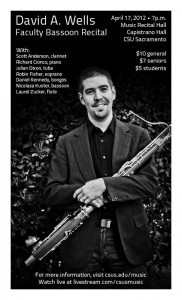
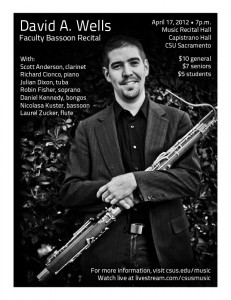
April Recital

On Tues­day, April 17th, I’ll be giv­ing my first fac­ul­ty recital at Sac State. I decid­ed that I want­ed to col­lab­o­rate with as many of my new col­leagues as pos­si­ble, so the pro­gram is a whole series of duos (not nec­es­sar­i­ly in this order):

P.D.Q. Bach – “Dutch” Suite for bas­soon and tuba with Julian Dixon
Gabriel Fau­ré – Sicili­enne for bas­soon (cel­lo) and piano with Richard Cionco
Alfon­so Fuentes – Mejun­je del Fagob­on­go for bas­soon and bon­gos with Daniel Kennedy
Fran­cis­co Mignone – Cin­co peças for sopra­no and bas­soon with Robin Fish­er
Fran­cis Poulenc – Sonata for Clar­inet and Bas­soon with Scott Anderson
Sergei Rach­mani­nov – “Do Not Sing, My Beau­ty”, arr. for bas­soon and piano by Richard Cionco
Alexan­dros Kalogeras – Music for Two Bas­soons with Nico­lasa Kuster
Heitor Vil­la-Lobos – Bachi­anas Brazilieras No. 6 for flute and bas­soon with Lau­rel Zucker

The con­cert, which starts at 7 p.m. PDT, will be streamed live at livestream.com/csusmusic. So, if you can’t make it in per­son, you can watch from home!

I’ve made two posters: a legal-sized ver­sion (which is the one I’ll be print­ing and post­ing), and a let­ter-sized ver­sion (for any­one who’d like to print it, but does­n’t have legal paper on hand).

Legal (8.5“x14”) — Click to Down­load PDF

Let­ter (8.5“x11”) — Click to Down­load PDF

The Way of Tea, The Way of Bassoon

Sokiku Nakatani Tea Room

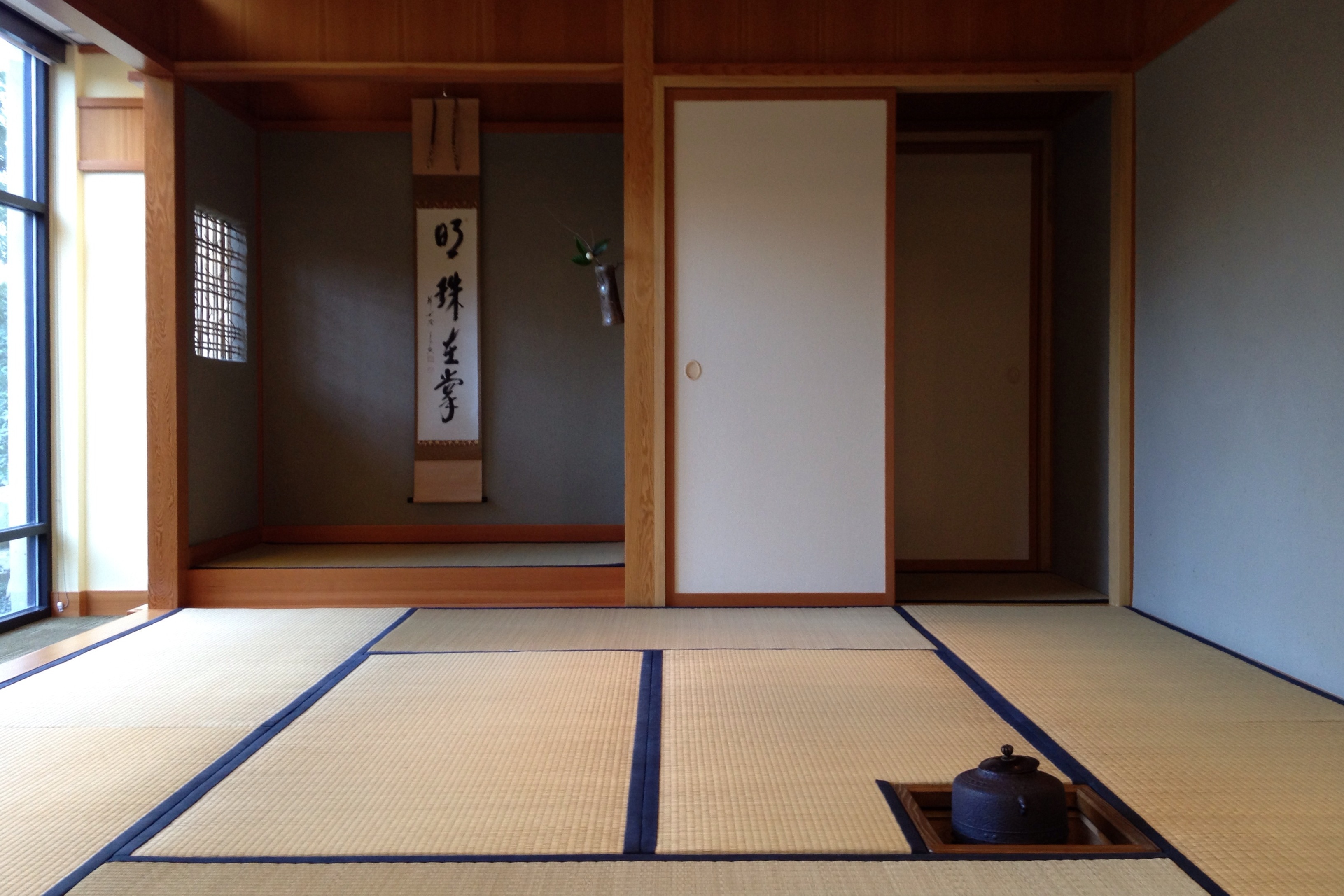
The library at Sacra­men­to State boasts a fea­ture which is, I believe, unique among Amer­i­can aca­d­e­m­ic libraries: a Japan­ese tea room. The Sokiku Nakatani Tea Room, which was ded­i­cat­ed in 2007, was the gift of an anony­mous donor and is named after a long-time Sacra­men­to-area prac­ti­tion­er of Cha­do (more on this term soon). The tea room sits in the library’s base­ment, with win­dows look­ing out onto a small adja­cent gar­den that is clev­er­ly tucked away from the hus­tle and bus­tle above. In addi­tion to hous­ing a col­lec­tion of tea ware and tea prepa­ra­tion uten­sils, the tea room peri­od­i­cal­ly hosts tea cer­e­monies — more than twen­ty just this semester.

The room itself is small, but it has been clev­er­ly con­struct­ed as a two-walled room-with­in-a-room to allow larg­er groups to par­tic­i­pate in the cer­e­monies. Closed-cir­cuit cam­eras and flat screen TVs even pro­vide close-up views for those seat­ed in the back rows. It just so hap­pened that one of this semes­ter’s tea cer­e­monies fell dur­ing our usu­al week­ly reed/studio class time. I reserved spots for myself and my stu­dents and we took the week off from form­ing and scrap­ing to learn about tea instead.

Our ses­sion began with Christie Bartlett of the San Fran­cis­co Urasenke Foun­da­tion explain­ing the his­to­ry of the tea cer­e­mo­ny. Its ori­gins are in Chi­na in the 8th cen­tu­ry, but it spread to Japan in the 9th cen­tu­ry and was refined and ele­vat­ed to an art form in the 12th through 16th cen­turies. She also explained that the term Chanoyu (also Cha­do) is often trans­lat­ed as “tea cer­e­mo­ny,” but a more cor­rect ren­der­ing in Eng­lish is “the way of tea.” This reflects the influ­ence of Zen Bud­dhism on its devel­op­ment — the cer­e­mo­ny itself has more to do with phi­los­o­phy than mere procedure. 

Our Host Prepar­ing the Tea

Every aspect of the cer­e­mo­ny is high­ly for­mal­ized. The guests enter the tea room one-by-one, scoot­ing in through the tra­di­tion­al­ly small door — every­one, no mat­ter his or her social or polit­i­cal stand­ing, must kneel to enter. The guests make two stops inside the room before set­tling down. The first is in front of the tokono­ma, a small alcove in which are dis­played a cal­li­graph­ic scroll and a sim­ple flower arrange­ment. The sec­ond is at the hearth, in which the tea water is heat­ed. Once the guests are set­tled, the host enters, and the cer­e­mo­ny prop­er begins. Each per­son involved is respon­si­ble for doing or say­ing cer­tain things, but the host and the first guest have the most involved roles. The host pre­pares the tea in a very pre­cise, inten­tioned, and prac­ticed way. Every motion is well thought out and efficient. 

In the actions of the host (whose name I did­n’t catch — sor­ry!) as she pre­pared the tea, I observed a num­ber of qual­i­ties to which we should also aspire in play­ing the bassoon:

  • Econ­o­my of Motion - Our host moved exact­ly as much as nec­es­sary to com­plete each action — no more, no less.
  • Mind­ful­ness and Focus - As she pre­pared the tea, our host gave her full atten­tion to what she was doing. Nar­ra­tion and ques­tions were han­dled by Ms. Bartlett. Our host did speak to us, but always in between batch­es of tea.
  • Exe­cu­tion - It was very clear that our host was extreme­ly prac­ticed in her motions, and exe­cut­ed them exact­ly the same way for each of the four batch­es of tea she prepared.

Econ­o­my of fin­ger motion is cer­tain­ly essen­tial to a flu­id bas­soon tech­nique, and we should of course strive to always con­cen­trate on what we are play­ing. But I think that the last of these qual­i­ties — pre­ci­sion of exe­cu­tion — has the most to teach us about per­form­ing. One action in par­tic­u­lar impressed me quite a bit. At a cer­tain point dur­ing the prepa­ra­tion of each bowl of tea, our host would use a small fold­ed cloth to wipe the rim of a the tea bowl. Once she had done this, she would set the cloth (rather thick when fold­ed) on the slant­ed lid of the tea pot, itself perched on top of a small cylin­der (seen to the left of the ket­tle in the above pho­to). Even though the lid was sloped at a steep angle and was bare­ly wider than the cloth, she nev­er moved ten­ta­tive­ly or had to make any adjust­ments to keep the cloth from falling off. She sim­ply set it on its seem­ing­ly pre­car­i­ous perch and moved on.

To my way of think­ing, this is exact­ly how we should per­form a dif­fi­cult musi­cal pas­sage — with inten­tion, con­fi­dence, and plen­ty of prepa­ra­tion. We can’t gin­ger­ly approach the high C that opens Stravin­sky’s Rite of Spring, nor can we stop to make adjust­ments to our reed or our fin­ger­ing once we’ve start­ed play­ing it. Our prepa­ra­tion has to be so good that we can sim­ply place the C on its perch, just like the tea cloth, and then move on.

But beyond the actions involved in prepar­ing tea, I believe that the phi­los­o­phy of the cer­e­mo­ny has some­thing to teach us musi­cians, as well. This les­son is nice­ly encap­su­lat­ed by some­thing Ms. Bartlett said after we had con­sumed our tea: “The tea cer­e­mo­ny is not about drink­ing green liq­uid.” That is, prepar­ing and drink­ing tea is not the point. Rather, the way of tea is about peo­ple com­ing togeth­er to step away from the con­cerns of the world, appre­ci­ate the beau­ty of sim­ple actions and ordi­nary things, and to talk with each oth­er as equals about beau­ty, art, and the like.

I see in this a strong par­al­lel to the rit­u­al of rehears­ing and per­form­ing in a musi­cal ensem­ble. To para­phrase: “Play­ing in an orches­tra is not about oper­at­ing the bas­soon.” Between reeds, fin­ger­ings, and dif­fi­cult musi­cal pas­sages of all kinds, it’s easy to focus on the act of just mak­ing our instru­ment func­tion. But our real pur­pose for being there is to con­nect with our fel­low play­ers and to make music. If we lose sight of this, we can’t ever reach our full poten­tial as performers.

These are my ini­tial impres­sions, but the cer­e­mo­ny gave me and my stu­dents plen­ty on which to rumi­nate. I think it’s very help­ful to have a some­thing com­plete­ly out­side the realm of music to use as a frame of ref­er­ence for how we approach play­ing the bas­soon. Because we had such a good time and got so much out of the expe­ri­ence, I think I’ll make attend­ing a tea cer­e­mo­ny an annu­al CSUS Bas­soon Stu­dio event.

Fingering Charts

Update (6/25/2014): Find the lat­est ver­sion of my fin­ger­ing charts here: https://davidawells.com/resources/fingering-charts/

E-flat fingering

My favorite fin­ger­ing. No, really…

A cou­ple of weeks ago, I start­ed teach­ing a high school vio­list who decid­ed that she’d like to play the bas­soon. Not know­ing if she’d got­ten her hands on a fin­ger­ing chart or not, I decid­ed to take one to her les­son. I have quite a few charts lying around, but as I looked through them, I real­ized that I did­n’t com­plete­ly agree with any of them, at least not for use by a begin­ning stu­dent. I end­ed up tak­ing her a copy of a chart that I’d got­ten from the Conn-Selmer web site, but only after I’d marked it all up with a pen. It turned out that she did have a fin­ger­ing chart already, but I did­n’t com­plete­ly agree with it, either. As I was dri­ving home from her first les­son, I thought to myself how sil­ly it is to give a stu­dent a fin­ger­ing chart that I’ve marked all over, espe­cial­ly since this cer­tain­ly isn’t the first time I’ve done so. I resolved then and there that I’d make my own fin­ger­ing chart.

Awhile ago, I’d come across the very cool and well-thought-out Fin­ger­ing Dia­gram Builder built by Bret Pimentel, mul­ti­ple-wood­winds teacher at Delta State Uni­ver­si­ty. (You can read more about the FDB here). But until now, I had­n’t done any more than just play around with it. I used Bret’s FDB to crank out an image for each of my basic fin­ger­ings. I includ­ed my most com­mon alter­nate fin­ger­ings, but did­n’t get into slur, mut­ed, trill, or oth­er variations.

Once I had all of the images, I had to decide how best to lay them out with­in a score. I’ve been using Finale for years, but I’d recent­ly start­ed play­ing around with Lily­Pond. Lily­Pond is an open-source music engrav­ing pro­gram that pro­duces very nice-look­ing scores — far clos­er in appear­ance to good old-fash­ioned hand engrav­ing than Finale’s often jagged and weird­ly-spaced out­put. The down­side (if you choose to see it that way) is that Lily­Pond has no graph­i­cal user inter­face; it gen­er­ates scores from spe­cial­ly for­mat­ted text files, and is in that way more like a pro­gram­ming lan­guage than a tra­di­tion­al nota­tion pro­gram. But, I’d been look­ing for a project to under­take with Lily­Pond, and this seemed like just the thing.

It took awhile to get the hang of Lily­Pond, and some for­mat­ting things I only ever got by tri­al and error. But, I final­ly end­ed up with two ver­sions of my per­son­al fin­ger­ing chart. The first is the one I’ll hand stu­dents. It cov­ers the more-or-less stan­dard range of the bas­soon (Bb1 — E5), uses only bass and tenor clefs, and includes a dia­gram with key names. The sec­ond, which I’ve dubbed my “Pro” chart, dis­cards the key dia­gram and switch­es to tre­ble clef at the top end. Oh, it also goes up to Bb5 (although I don’t yet have a reli­able fin­ger­ing for A5 — anybody?).

Since Bret has made the dia­grams gen­er­at­ed by his FDB avail­able under a Cre­ative Com­mons Attri­bu­tion-Non­Com­mer­cial-Share­Alike 3.0 Unport­ed (CC BY-NC-SA 3.0) license, I’ve done the same with my charts. Please, take a look and let me know what you think. Is there any­thing I could do to make them eas­i­er to read, eas­i­er to use, or just plain look nicer? Or do you spot any fin­ger­ings that I’ve ren­dered incorrectly?